
The Conversation That Changed Everything: Learning to Actually Listen
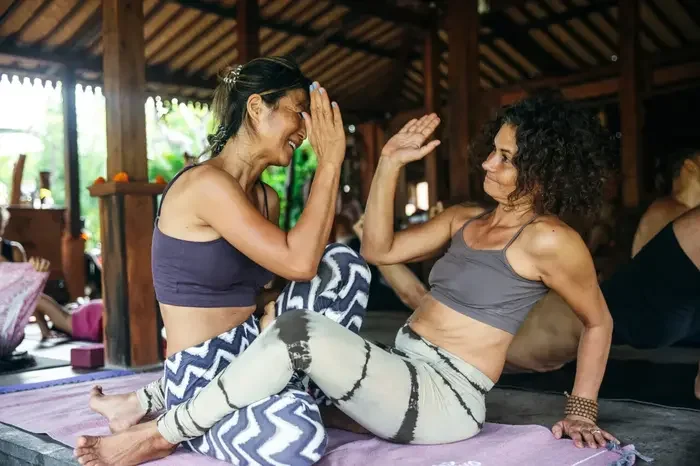
I thought I was a good listener. Then I met Pak Budi.
He was the gardener at Ubuntu Bali, always tending to the frangipani trees near the yoga shala. One afternoon between wellness classes, I asked him about his work. What happened next exposed a truth I'd been avoiding for years: I had no idea how to actually listen.
The Wake-Up Call
Pak Budi started telling me about his grandfather teaching him to understand plants by observing their leaves. Halfway through his second sentence, my mind wandered to dinner plans. Then I caught myself about to interrupt with my own plant story. Then I realized I was already formulating my response instead of hearing his words.
I wasn't listening. I was waiting to talk.
"You seem far away," he said kindly, in that gentle Indonesian way that somehow makes honesty feel like care rather than criticism. He was right. I was physically present but mentally absent—something I'd done in countless conversations without realizing it.
The Indonesian Art of Presence
That evening, Pak Budi invited me to join him for tea. "In Indonesia, we have a saying," he told me, pouring slowly. "Duduk sama rendah, berdiri sama tinggi." Sit equally low, stand equally high. It means meeting someone as equals, being fully present with them.
He explained how in traditional Indonesian culture, listening isn't just about hearing words—it's about feeling the space between them, respecting silence, understanding what's unspoken. "We don't rush to fill quiet," he said. "Sometimes the truth lives there."
I thought about how different this was from my usual conversations. Always rushing, overlapping, interrupting to show I'm engaged. But was I? Or was I just performing engagement?
The Practice of Presence
Active listening isn't passive—it's one of the hardest things I've learned. During my time at Ubuntu Bali, we practiced it daily. In yoga classes, we listened to our bodies instead of pushing through pain. In meditation sessions, we listened to our breath, our thoughts, our resistance.
The teachers showed us that listening is a full-body experience. It's eye contact. It's putting your phone face-down. It's noticing when you start planning your response and choosing to return to their words instead.
One technique changed everything for me: the pause. After someone finishes speaking, pause for three seconds before responding. It sounds simple, but try it. In that pause, you'll catch all the times you weren't really listening—you were just loading your next comment.
Pak Budi called it "making space for the other person to be whole." In Indonesian culture, there's this beautiful practice of honoring the person in front of you—not with empty politeness, but with genuine attention. It's renewal in its purest form: clearing away your own noise to make room for someone else.
Small Changes, Big Renewal
I started practicing everywhere. At the retreat's communal dinners, I asked questions and actually waited for answers. During yoga sessions, I listened to my students’ breathing to sync our movements. Even in silence, there was so much to hear.
My favorite practice became the evening tea ceremony. We'd sit in a circle, and one person would share something from their day. No cross-talk, no advice-giving, no "yes, and..." Just witnessing each other fully.
This is what rejuvenation looks like, I realized. Not just resting our bodies, but resting our need to perform, to fix, to center ourselves in every story.
Coming Home Present
Now when my best friend calls, I close my laptop first. When they speak, I turn toward them—physically turn my whole body—to signal I'm here. When my mother tells the same story for the tenth time, I listen like it's the first, because for her, maybe it needs to be told again.
Active listening is a practice of renewal—for our relationships, for our presence, for our humanity. It's choosing connection over cleverness. It's remembering that sometimes the most healing thing we can offer isn't a solution, but simply: I hear you.
Pak Budi taught me more than gardening that day. He taught me that true listening is like tending to plants—it requires patience, presence, and trust that growth happens when we stop forcing it.
The conversations I have now? They're different. Deeper. More real. Because I'm finally here for them.
Ready to reconnect with yourself and others? Ubuntu Bali's personalized wellness retreats combine yoga, meditation, and mindfulness practices tailored to your journey. Whether you need a weekend reset or a deeper transformation, we create space for your renewal.