Wellness for Digital Nomads: Staying Sane While Working From Paradise
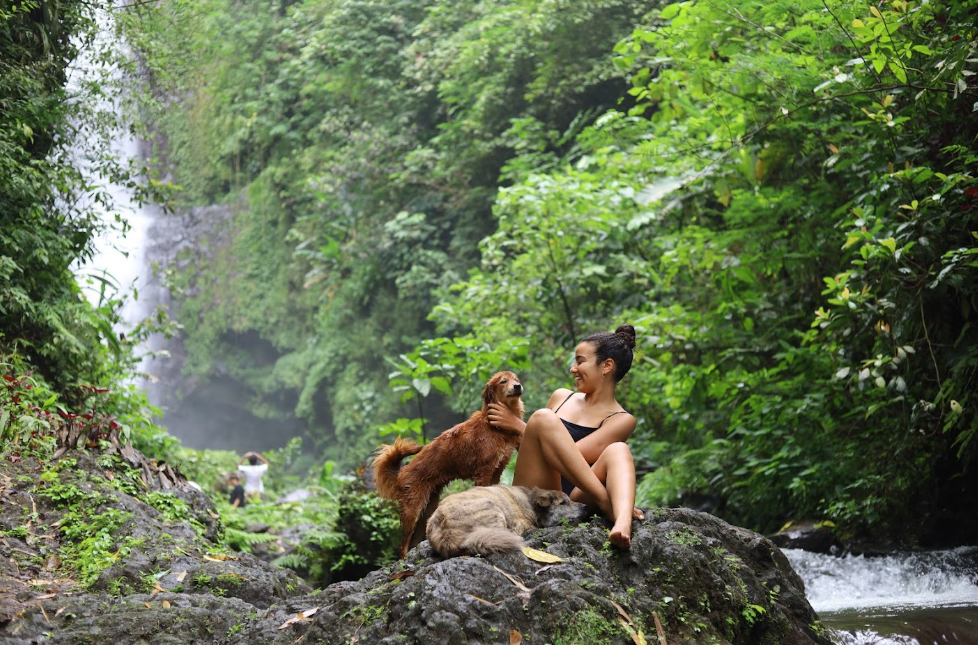
Picture it. The laptop is open, the coconut is sweating on the table, the rice fields are glowing that impossible green, and you are staring at the screen with your jaw clenched because the 11 pm call with London just ran over. Again.
Welcome to paradise.
I say this with a lot of love, because I have watched so many of you walk through the gates of Ubuntu over the years: bright eyes, big dreams, a one-way ticket and a Wi-Fi password. And a few months later, some of those same eyes come to the mat tired, wired, a little lost, and quietly wondering why living the dream feels so exhausting.
So let's talk about it. Wellness for digital nomads is not a luxury add-on. It's what keeps the dream a dream.
The Paradise-Burnout Paradox
Here is the funny thing about remote work burnout in Bali. We think we left the stress behind with the grey office and the commute, but stress is a clever little traveller, it packs itself in the suitcase without asking.
There is no office door to close, so the work never ends. The time zones pull you in three directions, mornings for Europe, nights for the US, and somewhere in between you are supposed to surf. The beach is right there, so you feel guilty for working, and when you are at the beach you feel guilty for not working. And because everything around you is so beautiful, you tell yourself you have no right to feel tired.
But you do. The body does not care about the view. The nervous system does not know you are in paradise, it only knows it has been switched on for fourteen hours.
I know this one personally. In our Samadi days I worked fifteen hours a day, teaching, dishwashing, accounting, sourcing suppliers, inventing recipes, marketing. Living my dream, yes. Also running on empty. What saved me was not a holiday. It was structure, practice and people.
Build Your Routine Around Remote Work (Not the Other Way Round)
Freedom without a little structure turns into chaos quite quickly. The trick for good work-life balance in Bali is to build the anchors first and let the work fit around them.
Movement first. Before the inbox, before the phone, before the world gets its hands on you. I still rise at 3:15 am for my own practice (no, I'm not asking you to do that, please don't send me angry emails). But an hour on the mat in the morning, a yoga class in Canggu before the heat, sets the tone of the whole day. You arrive at your laptop already having done something for yourself.
Sleep like it's your job. Because in a way it is. Late calls, late dinners, late nights out in Canggu, it adds up. Try to protect a regular bedtime at least five nights a week, and if you have late calls, block the early morning for rest instead of cramming both.
Screen limits with a start and an end. Decide when your workday begins and when it stops, and tell your clients. You'd be surprised how many people respect a boundary once you actually set one. Limitless leads to unstableness, as I often say, and a day without edges is exhausting.
Nervous-System Resets Between Calls
This is my favourite part, because it takes two minutes and nobody on the next call will ever know.
Between meetings, instead of scrolling (we all do it, I see you), try one of these:
Long exhale breathing. Inhale through the nose for four, exhale slowly for six or eight. The long exhale tells the body it's safe. It's the simplest calm-down button we have.
Ujjayi breath. The ocean-sound breath we use in Ashtanga. A few rounds with the eyes closed and the chatter in the mind starts to subdue.
Legs up the wall. Five minutes, phone in the other room. Your legs will thank you after hours in that café chair.
Dristi for tired eyes. Look away from the screen to the farthest point you can find, a palm tree, a cloud, and rest the gaze there for a few breaths. Your eyes have been locked on one small rectangle all day, give them the horizon.
Shake it off. Literally. Stand up, shake your hands, your shoulders, your legs for thirty seconds. Animals do it after stress. It works for humans too, even if you look a bit silly.
Breath, prana, is our compass. When I notice my breath getting short and high in the chest, I know I'm out of balance before my mind admits it. Learning to read that signal is half the work.
Digital Detox Mini-Habits (No Need to Throw Your Phone in the Ocean)
You don't have to go full hermit to feel the benefit. Small steps bring back your power:
Keep the phone out of the bedroom. Buy a cheap alarm clock at the market.
No screens for the first hour of the day. Practice, breakfast, sunlight, then the world.
Turn off every notification that isn't a human who needs you.
Watch one sunset a week with no phone at all. No story, no photo. Just you and the sky doing its thing.
One offline morning at the weekend. The emails will still be there, I promise, they always are.
Why Community Beats Isolation for Digital Nomads in Canggu
This is the one nobody talks about enough. Being a digital nomad in Canggu can be strangely lonely. You are surrounded by people all day, in cafés and co-working spaces, and still you can go a week without one real conversation. Everyone is a little bit passing through.
When we opened Samadi, Canggu had no real yoga community and "commitment" was not a very popular word on our laid-back tropical island. People dropped in and dropped out. So we made community our top priority: dinners, movie nights, workshops, farmers markets. And something beautiful happened. Strangers became friends, some became couples, some even married and had babies with our teacher as their doula.
That is when I truly understood that community is medicine. Seeing the same faces every morning on the mat, being missed when you don't show up, having someone ask how your launch went, this is what holds you when the work gets heavy and home is far away.
Using Yoga, Café and Co-Living as Your Anchor
For a nomad, an anchor is a place that stays the same while everything else moves. At Ubuntu we try to be exactly that:
The Mysore program. Ashtanga Mysore in Canggu is made for people with unpredictable schedules. You come in within the practice window, practice at your own rhythm, and the teacher guides you one to one. It's a daily practice that bends around your calls without breaking.
Daily yoga classes in Canggu in different styles, for the days you need to be led rather than lead yourself.
The Ubuntu café. Food has always been our gathering point. Sit down after practice, share a table, and let a conversation happen with a human, not a screen.
Onsite residency. Living where you practice, tucked away in our little river valley off a back alley of Canggu, takes away half the decisions in a day. Wake up, roll out the mat, have breakfast, work, repeat. Simple is sane.
Retreats and coaching. When you feel the burnout creeping, a spiritual retreat in Bali or a coaching intensive can be the reset button. And if what you are really craving is clarity on where your life and work are going, my life coaching sessions are there for exactly that.
A Little Visa and Levy Note (Because Sanity Also Means Paperwork)
I'm a yoga teacher, not an immigration officer, so please check the official sources, but here's the short version. The E33G is Indonesia's remote worker visa, a one-year permit to live on the island while you work remotely for a company abroad, with your income coming from outside Indonesia. Applicants must show a minimum annual income of USD 60,000 from their foreign employer. Working on a tourist visa is not the way, as immigration has stepped up checks on remote workers, including deportations of people working on tourist visas. Remote Worker Visa in Bali (E33G) 2026: Digital Nomad Visa Requirements, Rules, and Tax — Emerhub +2
And don't forget the tourist levy: a one-time IDR 150,000 fee paid once per trip through the official Love Bali portal. Watch out for copycat sites, use only the official .go.id address. The money goes towards protecting Bali's culture and nature, and Mama Bali deserves it. Wego Travel Blog
Coming Home to Yourself
Paradise is not a place, it's a state. You can have the palm trees and the pool and the flexible schedule, and still feel like a shooting star falling out of the sky. Or you can have a simple routine, a morning practice, a few real friends and a café where they know your name, and feel at home anywhere.
So take the small steps. Breathe between the calls. Close the laptop at sunset. And come find us on the mat. We'd love to meet you.
With love and light,
Andréa & the Ubuntu Bali Family
Sources :